

What came out of the yard
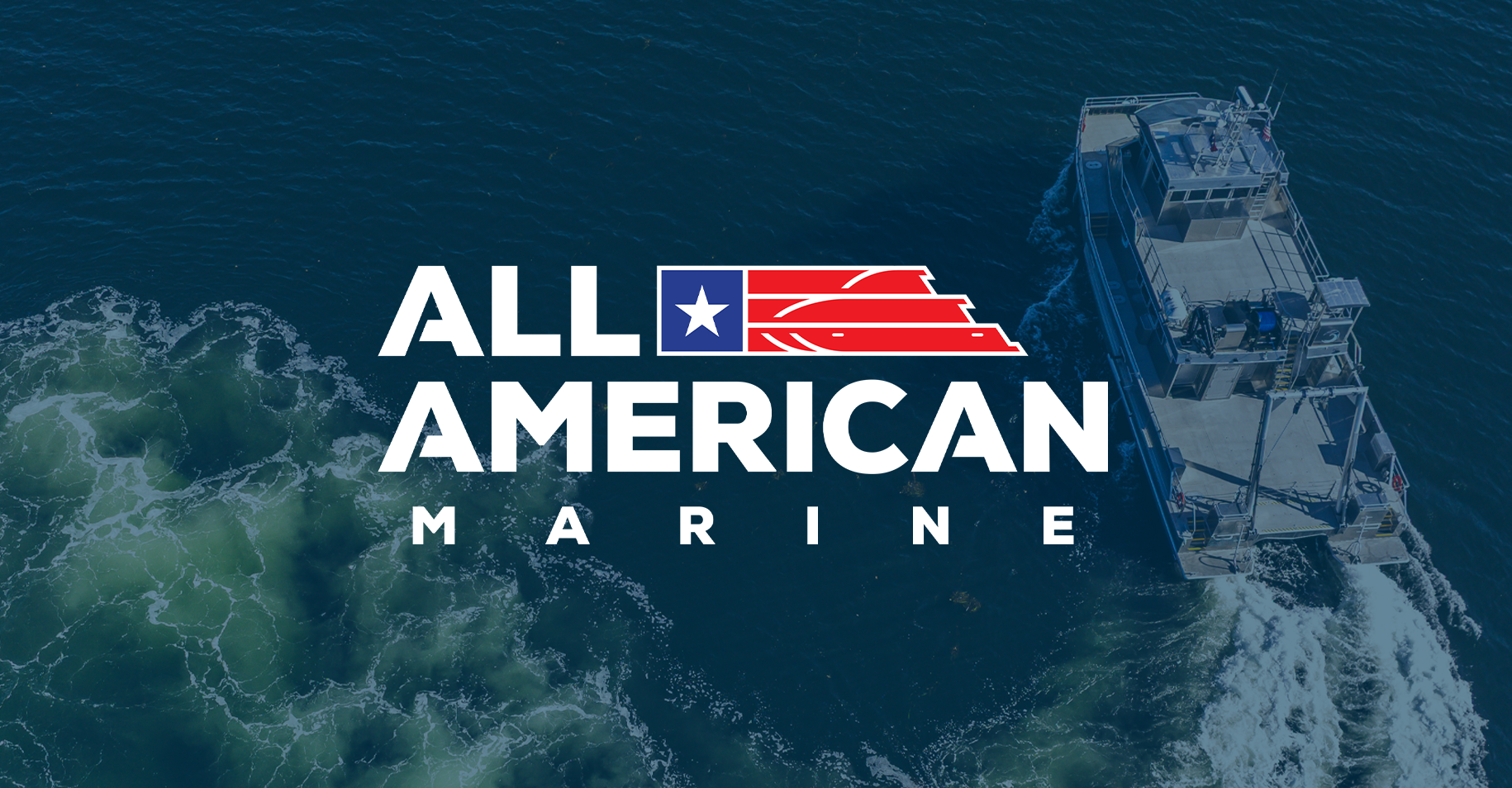
All American Marine recently shipped the R/V Osprey to the University of North Carolina Wilmington, a 78-foot hydrofoil-assisted research catamaran built to USCG Subchapter T standards and commissioned for supporting scientific and educational missions along the Mid-Atlantic and Carolina Coast.
R/V Osprey is purpose-built for the full operational range a working research platform demands. Her mission profile includes multibeam and oceanographic survey operations, biological studies, marine mammal monitoring, dive support, and hands-on educational programs for students and faculty. She accommodates live-aboard operations for up to 10 personnel and day-trip capacity for 20. Onboard scientific infrastructure includes a Kongsberg ADCP electronics suite, a fixed WASSP multibeam system, dedicated wet and dry lab spaces, and full equipment deployment and retrieval capability for instrumentation including buoys and AUVs.
But one of the vessel’s most significant results is something operators will see every time they leave the dock: fuel efficiency.
Powered by twin Scania DI16-082M EPA Tier 3 engines rated at 800 mhp, deliver a 22-knot transit speed while maintaining a 1.5 knot survey operation capability. During laden sea trials, the vessel produced AAM’s best fuel-efficiency result yet among the closest comparable builds in its size and displacement class.
That result matters because research vessels spend a significant portion of their operating lives getting to and from the work. Every reduction in fuel required for transit lowers operating cost, increases the useful range available from the vessel’s 1,500-gallon fuel capacity, and allows more of the operating budget to go toward the mission rather than getting there.
What operators are asking
Research operators are looking beyond rated horsepower. They want to know how efficiently a vessel will transit, how it will perform fully loaded and whether it can provide a stable working platform once the science begins.
Osprey demonstrates that those requirements do not have to compete with one another. On R/V Osprey, those requirements are addressed together. The Teknicraft hull’s asymmetrical sponsons reduce wetted surface and resistance at operating speed, while the hydrofoil supports approximately one-third of the vessel’s weight at cruise. That means less horsepower and less fuel is required to maintain service speed, with minimal change in consumption between light and fully loaded conditions.
The significance of Osprey’s sea-trial performance is not simply that the vessel achieved a good fuel number. AAM has built multiple vessels in this size and displacement range, giving us a meaningful performance history against which to compare each new platform. Osprey has moved that benchmark forward.
And it has done so without sacrificing mission capability.
The hull also provides the stability and deck area needed for a 5,000 pound A-frame, a deck crane, wet and dry labs, multibeam sonar, acoustic Doppler current profilers, and the deployment of buoys, gliders and other oceanographic equipment.
Through successive research vessel programs, AAM has refined and proven this multi-mission platform across a wide range of operators, missions and working environments. Each build draws on that established foundation while being configured around the customer’s specific research requirements.
For operators, the real question is not simply how much fuel a vessel saves. It is whether the entire platform can reduce operating costs while delivering the payload, stability and dependable performance required to complete the mission, no matter what the environment.
What it signals
Fuel costs will fluctuate, regulations will evolve, and research priorities and technologies will continue to change. Operators cannot control every variable, but they can control the platform they choose.
AAM has spent decades refining a proven multi-mission research platform across different operators, environments and working conditions. That experience gives customers a reliable foundation without limiting how the vessel can evolve over its service life. That matters over the life of a vessel. Lower fuel consumption affects far more than a single sea trial. It influences the cost of every transit, the range available for every mission, and the amount of operating budget that can be directed toward science rather than propulsion.
The industry is moving away from vessels designed around a single mission and toward platforms built for long-term adaptability. The greatest value will come from vessels that can support today’s work while accommodating the equipment, technology and operational demands that come next.
In an uncertain future, proven capability, adaptability, and increasingly efficient performance give operators something valuable: greater control over the cost of accomplishing the mission.
By Ron Wille, President, All American Marine
August 21, 2026
Latest News
The AAM Build Report – October Edition: Turning Seakeeping into Operational Advantage
What came out of the yard All American Marine recently launched M/V North Star, the second high-speed, long-range eco-tour vessel built for Phillips Cruises & Tours. Like her sistership, Chugach Express, North Star will ...More
The AAM Build Report – August Edition: Hull Form as Operational Strategy
What came out of the yard All American Marine recently shipped the R/V Osprey to the University of North Carolina Wilmington, a 78-foot hydrofoil-assisted research catamaran built to USCG Subchapter T standards and commissioned ...More
AAM Delivers 78′ Research Vessel to UNCW
Bellingham, WA, September 1, 2026: All American Marine (AAM) announces the delivery of a 78-foot aluminum research vessel commissioned by the University of North Carolina Wilmington (UNCW). Following successful sea trials at AAM's Bellingham, WA ...More
