

What came out of the yard
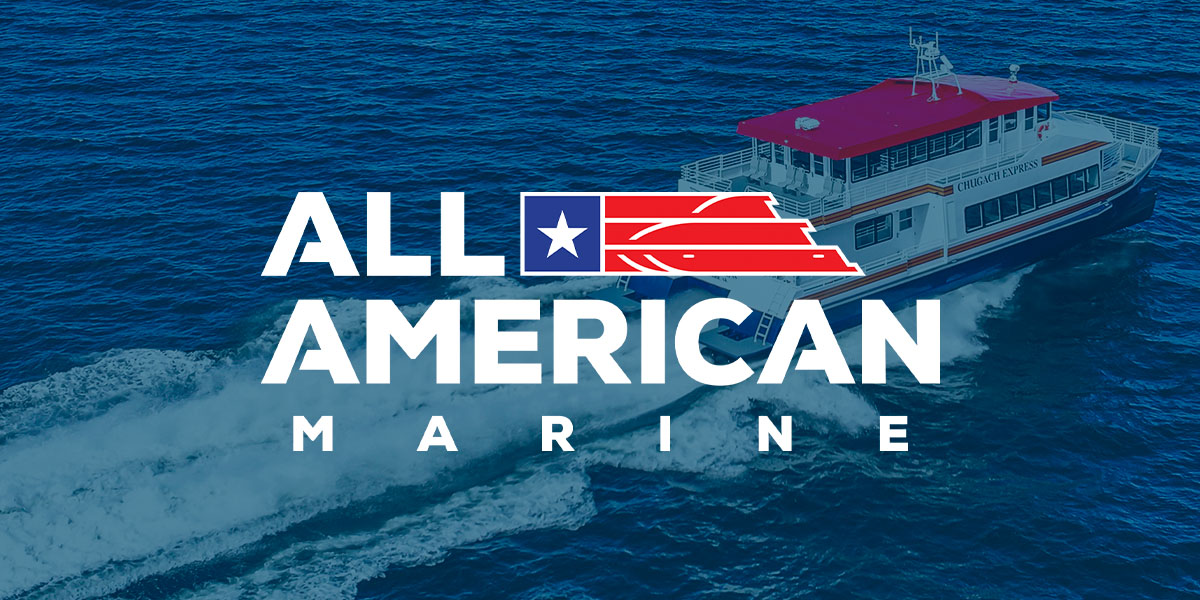
All American Marine recently launched M/V North Star, the second high-speed, long-range eco-tour vessel built for Phillips Cruises & Tours. Like her sistership, Chugach Express, North Star will operate from Whittier, Alaska, carrying passengers through the tidewater glaciers and wildlife-filled waters of Prince William Sound.
The 84.5-foot, hydrofoil-assisted aluminum catamaran features a Teknicraft Design semi-displacement hull and is certified to USCG Subchapter T standards for up to 150 passengers. Her propulsion package mirrors that of Chugach Express: four MJP 350X waterjets driven by quad 800 mhp Scania DI16 082M engines, paired with Teknicraft’s dynamic hydrofoil system and wave-piercing bow.
A repeat order is performance data in its clearest form. After operating Chugach Express through three demanding Alaska seasons, with full passenger loads, long days, and changing conditions. Phillips knew this platform could deliver.
One of the most notable changes is fuel capacity with Chugach Express carrying 1,200 gallons, while North Star carries 1,600. The increase did not require a redesign; it was made possible by proven performance. Chugach Express demonstrated that the hull could carry additional weight without sacrificing speed, efficiency, or ride quality. The second vessel uses that margin to add 400 gallons and extend its operating range.
But range is only part of the story. The Teknicraft hull and dynamic hydrofoil system are designed to reduce vessel accelerations underway, while the hull form and foil provide added motion damping at rest. For passengers, that means a more comfortable ride. For operators, it means a broader usable weather window, supporting more operating days, greater schedule reliability, and stronger revenue potential. That capability matters in Prince William Sound. Maintaining comfortable speeds in changing sea conditions can preserve more time at the destination while keeping the return schedule within reach. It can also mean the difference between completing a tour and remaining at the dock.
Last month, we examined how little fuel consumption changes between light and fully loaded conditions on a Teknicraft hull. North Star shows what an operator can do with that margin. Greater fuel capacity, strong seakeeping, and efficient performance combine to create something more valuable than any single specification: greater operating capacity.
What operators are asking
Top speed tells only part of the story. Passenger vessel operators need to know how a vessel rides at full load in real conditions, how guests feel after five or six hours aboard, and how much of the schedule can be maintained when the weather turns.
Those are seakeeping questions, and on a tour vessel, they show up in two places.
The first is underway. During transit, the Teknicraft hull form and hydrofoil lift work together to reduce vertical accelerations, the pounding and slamming that wear on passengers and crew over a long day.
The second is on scene. At a glacier’s face or alongside a pod of humpbacks, low-speed motion is often when passengers begin to feel unwell. Here, the hull form and foil help dampen that motion. Guests stay on deck, crews remain ready to work, and fewer people become what one of our operators calls “mal de mer zombies.”
One additional advantage comes in the adjustable hydrofoil. By de-tuning it, captains can make the vessel ride “heavier” at wildlife-viewing speeds, settling the hull and creating a steadier viewing platform. The vessel remains light and fuel-efficient during transit, then becomes more planted once on scene.
Weather is where seakeeping becomes operating capacity. These hulls can maintain comfortable speeds in conditions that force other vessels to slow down or remain at the dock. That broader operating window supports more completed trips, greater schedule reliability, and stronger revenue potential.
What it signals
As Alaska’s tour season winds down, passenger vessel operators head into the off-season with a full season of results in hand. That is when a vessel should be evaluated, by what it delivered through months of real service.
What these operators have learned is straightforward: comfort is operating capacity. A vessel that can sail comfortably in more conditions completes more departures, issues fewer refunds, and protects revenue. A vessel that remains steady at low speed keeps guests on deck and engaged. A hull with additional carrying capacity gives operators options, and Phillips Cruises and Tours chose to turn that margin into greater range.
Real performance is measured across the entire operating day: at full load, through a full season, and in the weather operators encounter, not the weather they started the season wishing for.
By Ron Wille, President, All American Marine
October, 2026
Latest News
The AAM Build Report – October Edition: Turning Seakeeping into Operational Advantage
What came out of the yard All American Marine recently launched M/V North Star, the second high-speed, long-range eco-tour vessel built for Phillips Cruises & Tours. Like her sistership, Chugach Express, North Star will ...More
The AAM Build Report – August Edition: Hull Form as Operational Strategy
What came out of the yard All American Marine recently shipped the R/V Osprey to the University of North Carolina Wilmington, a 78-foot hydrofoil-assisted research catamaran built to USCG Subchapter T standards and commissioned ...More
AAM Delivers 78′ Research Vessel to UNCW
Bellingham, WA, September 1, 2026: All American Marine (AAM) announces the delivery of a 78-foot aluminum research vessel commissioned by the University of North Carolina Wilmington (UNCW). Following successful sea trials at AAM's Bellingham, WA ...More
