

What came out of the yard
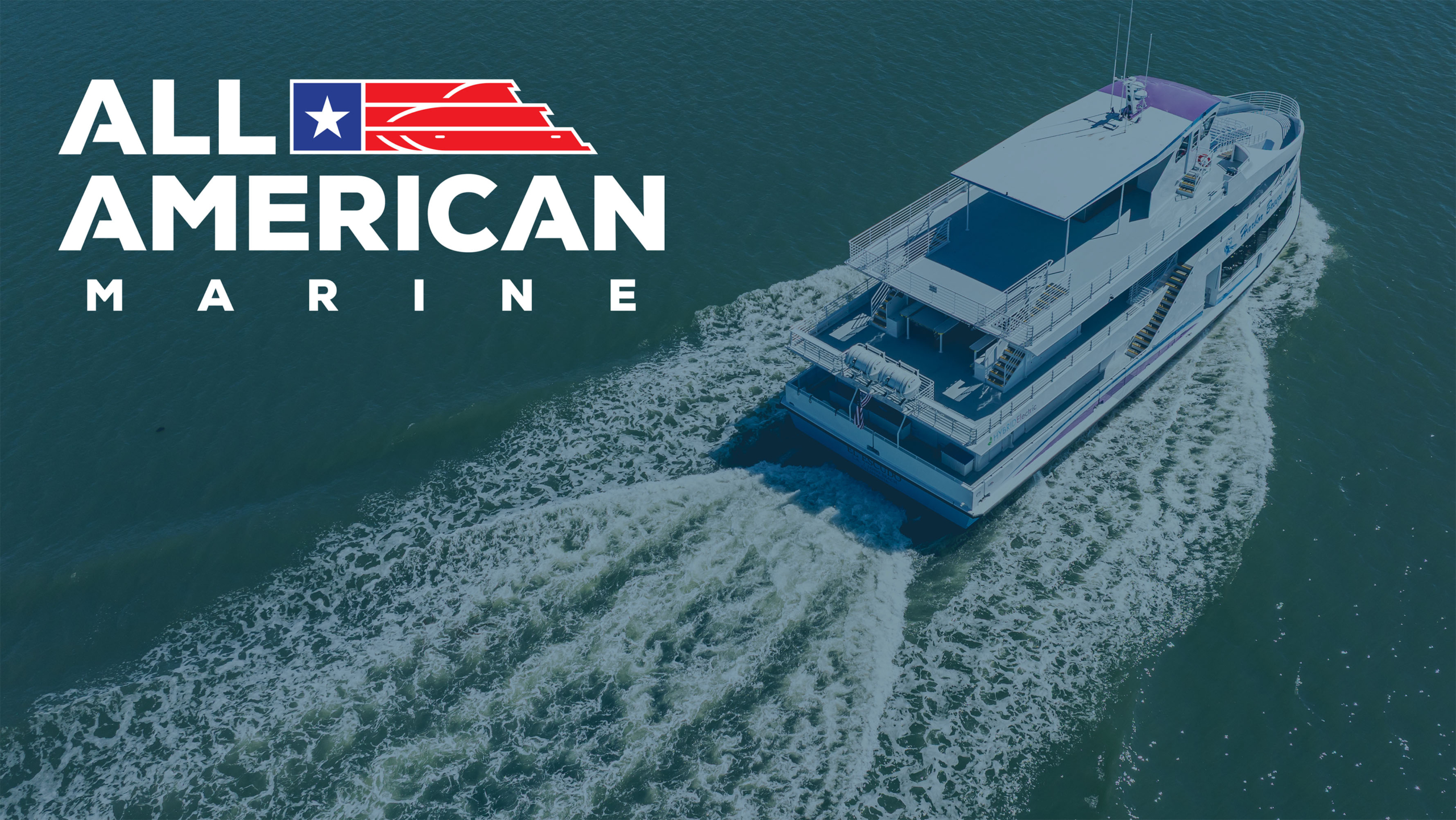
Last month, All American Marine delivered El Escudo, Harbor Breeze Cruises’ new 108-foot parallel hybrid passenger vessel. She is now headed to Southern California, where she will operate in the ports of Los Angeles and Long Beach.
There is a great deal of technology aboard El Escudo, but the real accomplishment is not any one component. It is how the vessel, propulsion system and operating profile were designed to work together. The parallel hybrid system gives Harbor Breeze the ability to operate on electric power during harbor tours, eliminating exhaust emissions while significantly reducing noise. For longer trips, the vessel can rely on its EPA Tier 4 diesel engines, supported by selective catalytic reduction (SCR) and diesel particulate filter (DPF) technology, without sacrificing the range, speed or flexibility a passenger vessel requires.
Most commercial operators cannot design a vessel around a single ideal operating condition. They need to consider their entire operating profile. Their boats may spend part of the day moving slowly through a harbor or running offshore at speed. The propulsion system needs to perform across all of it.
The vessel’s lightweight aluminum construction makes it significantly more efficient than a comparable traditional vessel. Moving less weight through the water requires less energy, whether that energy comes from batteries or diesel fuel.
What operators are asking
With fuel prices high, fuel consumption has moved back toward the top of the list in many of the inquiries coming into AAM. Operators want to know what the completed vessel will burn at its normal operating speed, how it will perform fully loaded, and what the savings may look like over its lifetime. Those are the right questions.
An engine specification only tells part of the story. Fuel consumption is also affected by hull shape, displacement, speed, passenger load, sea conditions, and the way the vessel is operated. Two boats with similar engines can have very different operating costs if one is pushing substantially more resistance through the water.
That is where our partnership with Teknicraft Design matters. Teknicraft’s catamaran hull shape and hydrofoil systems are designed to reduce resistance, improve ride quality, and carry payloads efficiently. The goal is not an impressive number during sea trials, it’s repeatable performance during the vessel’s normal working day. Fuel efficiency is not something that can simply be bolted onto a boat after the design is complete; it starts during the design, below the waterline.
What it signals
The recent deliveries of Cal Poly Humboldt’s North Wind and Harbor Breeze Cruises’ El Escudo have now demonstrated the successful deployment of EPA Tier 4 engines aboard two very different working vessels. One is a research vessel built for challenging coastal conditions. The other is a large passenger vessel that must operate efficiently, quietly and reliably in one of the country’s busiest port areas.
Both projects use advanced SCR and DPF systems while still providing the speed, range and performance their operators require. These are working commercial vessels designed to earn their keep. AAM currently has three additional vessels under contract that will use this same generation of EPA Tier 4 engine technology. These systems are no longer one-off solutions. They are becoming proven and repeatable choices for operators who need to reduce emissions while maintaining real-world capability.
Fuel prices will continue to move up and down, and propulsion technology will continue to change. The fundamentals will not. An efficient vessel begins with an efficient design, and an efficient hull pays for itself every day the boat is in service.
By Ron Wille, President, All American Marine
July 10, 2026
Latest News
The AAM Build Report – October Edition: Turning Seakeeping into Operational Advantage
What came out of the yard All American Marine recently launched M/V North Star, the second high-speed, long-range eco-tour vessel built for Phillips Cruises & Tours. Like her sistership, Chugach Express, North Star will ...More
The AAM Build Report – August Edition: Hull Form as Operational Strategy
What came out of the yard All American Marine recently shipped the R/V Osprey to the University of North Carolina Wilmington, a 78-foot hydrofoil-assisted research catamaran built to USCG Subchapter T standards and commissioned ...More
AAM Delivers 78′ Research Vessel to UNCW
Bellingham, WA, September 1, 2026: All American Marine (AAM) announces the delivery of a 78-foot aluminum research vessel commissioned by the University of North Carolina Wilmington (UNCW). Following successful sea trials at AAM's Bellingham, WA ...More
